Editable Text Effect Back to School: A Practical Guide for Designers Weighing Their Options
When preparing seasonal marketing materials, classroom decor, or educational content, designers and creative professionals often look for ways to produce polished typography without starting from scratch. The Editable Text Effect Back to School asset offers a ready-to-use style for Adobe Illustrator, promising flexibility and a distinct look. But how does it compare to other approaches? And when does it truly fit into a project workflow? This article breaks down what this editable text effect offers, where it shines, where it may fall short, and how to decide if it aligns with your needs.
What Makes This Editable Text Effect Distinct
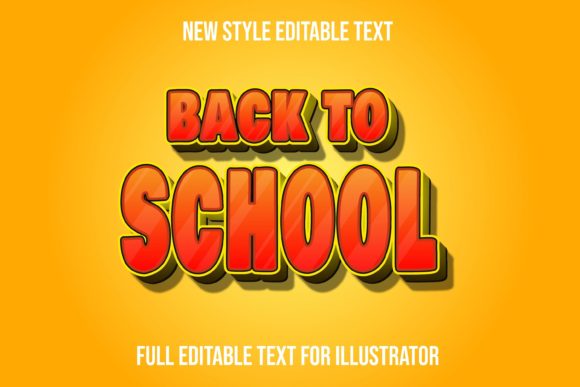
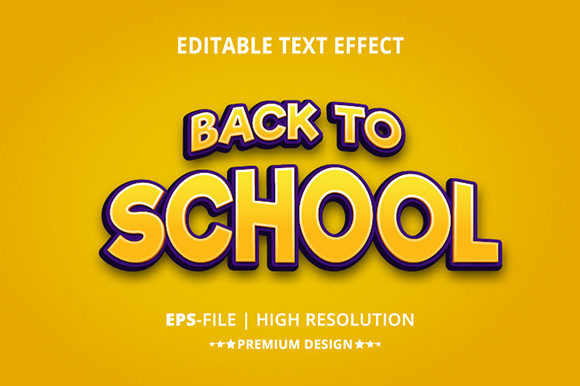
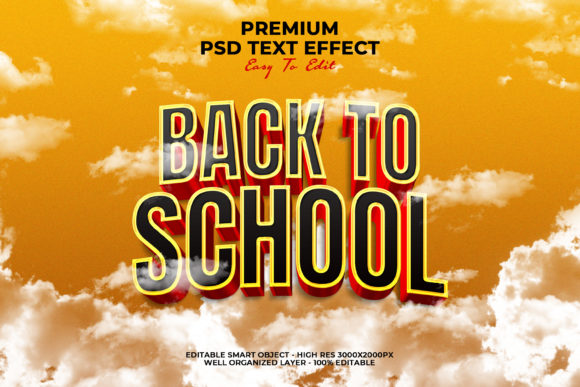
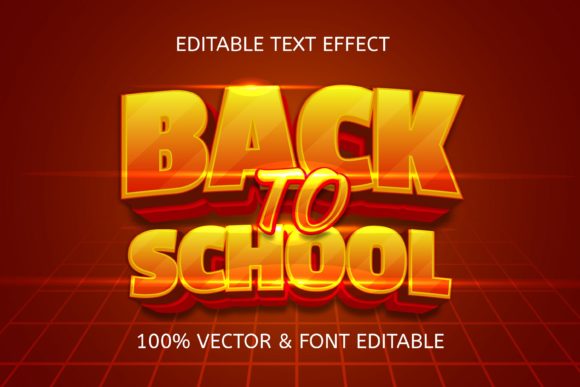
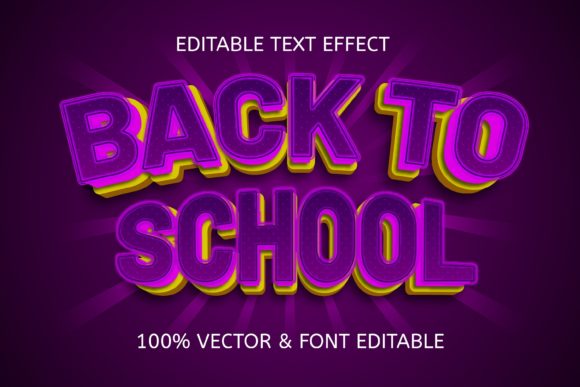
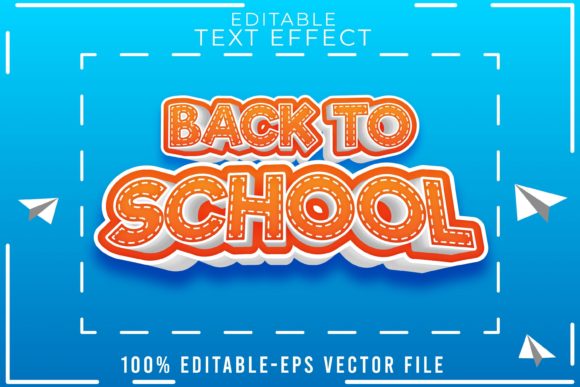
The Editable Text Effect Back to School is not a font. It is a layered effect file built for Adobe Illustrator (EPS format) that applies a designed style to any type or shape you choose. You can add your own text, adjust colors, scale elements, and modify individual components while keeping the overall look intact. Because it is fully editable, you are not locked into a preset phrase or design. This is a fundamental difference from static graphics or pre-rendered text files, which require you to accept the exact wording and styling as given.
Another key distinction is the "new style" version of this effect. It updates the visual approach while retaining the same editing principles. This means you can opt for a more current aesthetic without losing the workflow benefits of an editable template. For anyone working in educational design, back-to-school campaigns, or youth-focused projects, having two stylistic options broadens the range of tone and audience you can address.
Because the effect works with any font or shape, it gives you creative freedom. You can pair it with a clean sans-serif for a modern look, a playful rounded font for younger audiences, or a classic serif for a more traditional feel. This compatibility is a practical advantage over effects that only work with specific typefaces or require manual adjustment for each new font.
Comparing the Editable Effect with Alternatives
To understand where the Editable Text Effect Back to School fits, it helps to consider the main alternatives designers typically use for styled typography.
1. Starting from Scratch in Illustrator
Building a text effect manually in Illustrator gives you complete control. You can create gradients, shadows, outlines, and textures from the ground up. The tradeoff is time. Even for experienced users, replicating a polished, layered effect takes several steps. If you are producing multiple pieces of content or working under a tight deadline, this approach can slow you down. The editable effect, by contrast, gives you a head start while still allowing customization.
2. Pre-Made Static Graphics
Some designers use pre-made images or mockups where the text is already embedded. These are quick to drop into a layout but cannot be edited without recreating the graphic from scratch. If you need to change a school name, a grade level, or a promotional phrase, you often have to start over or find a new asset. The editable effect avoids this limitation entirely. You can update the text while keeping the style consistent across multiple versions.
3. Font-Based Alternatives
There are decorative fonts that mimic back-to-school themes, such as those with chalkboard textures, pencil outlines, or notebook patterns. These are easy to install and use in any application. However, a font alone cannot apply multiple layers, shadows, or dimensional effects. You would still need to add those effects manually in your design software. The editable text effect combines the convenience of a font with the visual complexity of a multi-layer style, offering a middle ground that saves effort.
4. Other Illustrator Text Effects
Many editable text effects exist for Illustrator, each with a different theme—holiday, retro, sci-fi, and so on. The back-to-school category is narrower but well-suited for seasonal campaigns, school websites, flyers, and classroom materials. Choosing between themes comes down to the context of your project. If you are designing for an educational setting or a back-to-school promotion, a themed effect gives you a cohesive look that aligns with the audience’s expectations.
Strengths and Practical Advantages
The Editable Text Effect Back to School offers several real-world benefits for designers and content creators.
- Time efficiency: You skip the repetitive work of building layers, blending modes, and effects from scratch. This is especially valuable when producing a series of graphics, such as banners for different grades or subjects.
- Consistency across outputs: Because the effect is reusable, you can maintain a uniform style across posters, social media images, presentations, and newsletters. This strengthens brand recognition and visual identity.
- Scalability without loss: Being vector-based (EPS format in Illustrator), the effect scales to any size without losing clarity. You can use it for small icons or large billboards without worrying about pixelation.
- Customization depth: You can change not only the text but also the colors, arrangement, and even individual elements within the effect. This allows you to match school colors, adapt to different backgrounds, or create variations for different audiences.
- No additional font purchase required: The effect works with any font you already have, so you are not forced to buy a specific typeface to use the design.
Limitations and Tradeoffs to Consider
No tool is without its constraints, and the editable text effect is no exception. Understanding these limitations helps you decide when it is the right choice and when another solution may serve you better.
- Software dependency: The effect is designed exclusively for Adobe Illustrator. If you use a different vector editor, a different design suite, or work primarily in raster-based software, you will not be able to open or edit the file. This is a significant barrier for teams that do not have access to Illustrator or prefer alternative tools.
- Learning curve for full editing: While the effect is described as easy to use, some users may need to understand Illustrator’s layer panel, appearance panel, and grouping structure to make deeper customizations. If you are new to the software, there may be a short adjustment period before you can modify the effect confidently.
- Style specificity: A back-to-school effect has a distinct visual character. It works well for projects that align with that theme, but it may feel out of place in more formal, corporate, or minimalist designs. If your project calls for a different tone, you may need a different effect or a custom approach.
- Limited differentiation: Because the effect is available to other designers, using it as-is without any customization may result in a look that others have used as well. To stand out, you will want to personalize the colors, layout, and text choices to fit your specific brand or message.
When This Effect Is the Right Fit
The Editable Text Effect Back to School is best suited for scenarios where speed, consistency, and theme alignment matter most. Consider using it when:
- You are producing multiple back-to-school graphics for a school district, a tutoring center, an educational publisher, or a retailer with seasonal promotions.
- You need to create variations for different grade levels, subjects, or campus locations, and you want them to share a unified visual style.
- You have access to Adobe Illustrator and are comfortable with basic editing tasks like changing text and adjusting colors.
- You are working on a tight deadline and want to skip the manual build phase without sacrificing a polished result.
- You want to offer clients or stakeholders the ability to request text changes without requiring a full redesign.
When You May Need Another Option
There are situations where the editable text effect may not be the ideal choice:
- You do not use Adobe Illustrator. If your workflow relies on Affinity Designer, CorelDRAW, Canva, or Photoshop alone, the EPS file format will not provide the same level of editability. In that case, consider a static graphic, a font-based approach, or a tool-specific template.
- You need a completely unique, one-of-a-kind style. If your project demands a bespoke visual identity that no template can match, building from scratch is the better path. The effect gives you a strong starting point, but ultimate originality requires custom work.
- Your project requires a very different theme. While the back-to-school style is flexible within its niche, it is not designed for holiday, corporate, or abstract themes. Choosing a themed effect that does not match your content can feel mismatched and reduce the impact of your message.
- You are working with a team that uses varied software. If collaborators need to edit the file but do not have Illustrator, the single-software limitation becomes a workflow bottleneck. In such cases, a font-based solution or a cross-platform template may be more practical.
Decision Factors for Designers
When evaluating whether the Editable Text Effect Back to School suits your project, consider these practical factors:
- Project volume: How many graphics do you need to produce? Higher volume favors templates that speed up production.
- Customization needs: How much do you plan to change from one version to another? The effect handles color and text changes well; major structural overhauls may be easier to build from scratch.
- Audience expectations: Does your audience respond to themed, playful typography? Back-to-school effects are often bright, friendly, and engaging, which works well for children, parents, and educators.
- Brand guidelines: Can you adapt the effect to your brand colors and style? If your branding is very specific, verify that the effect’s structure allows for those adjustments.
- Long-term use: If you anticipate repeating this campaign annually or across semesters, the effect becomes a reusable asset that pays for itself in time saved.
- Budget: Purchasing a single effect is generally less expensive than hiring a designer to create a custom style or spending hours building it yourself. Compare the cost against the value of your time and the number of uses you expect.
Realistic Examples of Use
To illustrate, imagine you are designing promotional materials for a community education center. You need a flyer for a back-to-school open house, a social media post for each program, and a banner for the center’s entrance. Using the Editable Text Effect Back to School, you can set up the main flyer first. Then you duplicate the file, change the text for each program, adjust the background color to match different age groups, and export all versions in a consistent format. The entire set can be completed in a fraction of the time it would take to build each graphic individually.
Alternatively, consider a freelance designer who receives a request from a school district. The district wants posters for five elementary schools, each with its own name and mascot. The editable effect allows the designer to produce all five posters with the same visual theme, only swapping the school name and adjusting a few colors to match each school’s branding. The client receives a cohesive set, and the designer saves hours of repetitive work.
Final Considerations
The Editable Text Effect Back to School and its newer style variant offer a practical middle ground between full manual creation and static assets. They give you control over text and color while providing a polished starting point that saves time. For designers who work in Adobe Illustrator and need to produce themed educational graphics efficiently, these effects are a solid resource. However, they are not a universal solution. Your choice should depend on your software environment, the volume of work, the degree of originality required, and the specific audience you are addressing.
By weighing these factors, you can decide whether an editable text effect fits your workflow or whether a different approach—such as building from scratch, using a font, or selecting a static graphic—better serves your project. The most informed decision comes from understanding both what the effect delivers and what it asks in return: a commitment to the Illustrator ecosystem and a willingness to customize within a provided structure. For many designers handling back-to-school content, that tradeoff is well worth making.