Evaluating the Back to School Admission Banner for Effective Campaigns
When planning for the upcoming school year, clear communication with prospective families and students becomes a high priority. Whether you manage a private school, run a tutoring center, or design marketing materials for educational clients, the ability to present admission details in a visually organized way is essential. The Back to School Admission Banner serves as a ready-made solution for this task, offering a template that balances visual appeal with informational clarity. This article examines what this banner template offers, its practical strengths, and who might benefit most from incorporating it into their workflow.
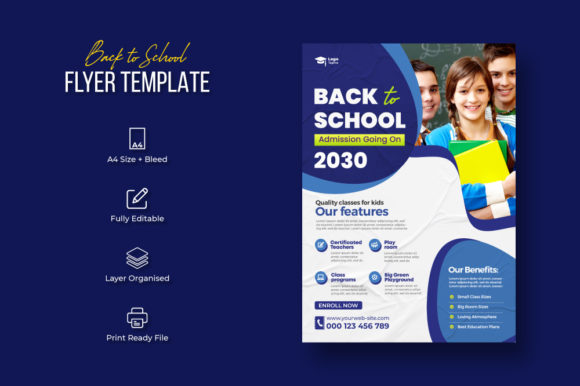
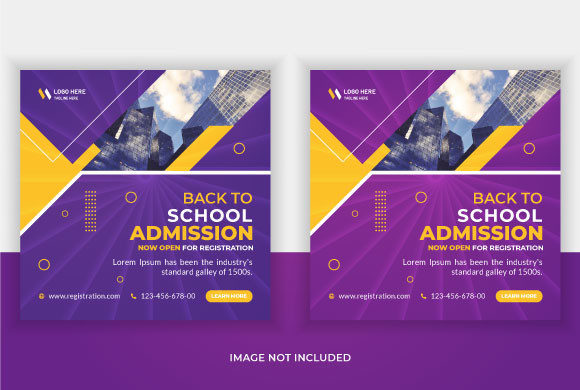
At its core, the Back to School Admission Banner is a design template intended for promoting enrollment periods, open houses, or registration deadlines. It typically includes placeholders for key details such as school name, dates, contact information, and a call to action. The template is often available in formats suitable for both print and digital use, such as social media posts, website headers, or physical posters. What makes it worth discussing is its focus on a specific seasonal need: the back-to-school period, when timing and first impressions matter for admissions.
Key Characteristics and Purpose
The primary purpose of this banner is to streamline the creation of admission announcements without requiring extensive design skills. It is built around common elements found in effective educational promotions. These include a clear headline, space for essential data, and visual cues that align with school branding. The template often uses colors and icons associated with learning, such as books, pencils, or graduation caps, which help set the right tone for the audience.
Key characteristics include:
- Predefined layout that organizes information logically, reducing the time needed to arrange elements from scratch.
- Customizable fields for text such as school name, admission dates, and contact details, allowing for quick personalization.
- Scalable design that can be adjusted for different formats, from standard letter-size posters to wide banners for websites or social media.
- Consistent typography and color schemes that maintain readability across various screens or printed materials.
For educators and marketers, these features mean less time spent on formatting and more focus on the message itself. The template acts as a foundation that supports both quick updates and more tailored adjustments for specific campaigns.
Strengths and Practical Value
One of the main strengths of the Back to School Admission Banner is its efficiency. During the busy enrollment season, staff often juggle multiple tasks, and designing promotional materials from scratch can become an unnecessary drain on resources. Having a template that is ready for immediate use helps maintain productivity while still producing professional-looking results. This is particularly valuable for small teams or individual professionals who lack a dedicated graphic designer.
Another strength lies in its versatility. While the template is designed with the back-to-school context in mind, its structure can be repurposed for other admission-related events, such as mid-year enrollment or summer programs. The key is to update the visuals and text to reflect the specific occasion. This flexibility extends its value beyond a single use, making it a practical investment for ongoing school communication needs.
From a practical standpoint, the banner template also supports consistent branding. When multiple departments or campuses need to announce admission deadlines, using a unified template ensures that all materials share the same look and feel. This consistency builds recognition and trust among parents and students, who can easily identify official communications. The template reduces the risk of inconsistent fonts, mismatched colors, or missing information that can occur when materials are created ad hoc.
Real-World Use and Effectiveness
When evaluating how the Back to School Admission Banner performs in real-world use, several factors come into play. Print quality matters for physical posters displayed in school hallways, community centers, or local businesses. The template should be provided at a high enough resolution to avoid pixelation when enlarged. For digital use, compatibility with common platforms like social media or email newsletters is important. Many templates include dimensions optimized for these channels, which can save time during the publishing process.
Another aspect of effectiveness is readability. A banner that is cluttered with too much information or uses small fonts will not serve its purpose. Good templates guide the viewer’s eye through the essential details first, with the most critical information—such as the admission deadline or open house date—placed prominently. The use of white space and clear headings contributes to this clarity. In practice, a well-designed template helps parents and students quickly grasp what action they need to take, reducing confusion and missed deadlines.
However, effectiveness also depends on the quality of the customization. Simply replacing placeholder text without reviewing the overall flow can lead to awkward spacing or misaligned elements. Users should take the time to preview the banner in its intended display size and adjust the content accordingly. For example, a social media banner with too much text may be hard to read on a mobile screen, while a printed poster with oversized graphics might overshadow the call to action. These adjustments are straightforward when the template offers editable layers, but they require some basic familiarity with design software.
Who Benefits Most from This Banner
The Back to School Admission Banner is most useful for professionals who need to produce admission materials quickly but still want a polished outcome. School administrators, particularly in private or charter schools, often have limited marketing budgets and must rely on templates to communicate with families. Marketing teams at educational organizations can use the banner as a starting point for larger campaigns, saving time on initial layouts while focusing on strategic messaging.
Small business owners who run tutoring centers, enrichment programs, or early childhood education services also find value here. They may need to promote enrollment for their own programs without the resources of a large institution. The template provides a cost-effective way to create banners that look professional and credible to parents. Freelance graphic designers and educators involved in school communication can use it as a base for client projects, modifying elements to match specific brand guidelines.
For creators like bloggers or content publishers in the education space, the banner can serve as visual support for articles or guides about school admissions. This is particularly relevant when promoting digital content through social media or email lists. The template’s adaptability allows them to maintain a cohesive visual identity across their channels without starting each design from zero.
Limitations and Considerations
No template is without limitations, and the Back to School Admission Banner is no exception. One common constraint is the level of customization possible. While editable fields are included, users may find that the overall structure is somewhat inflexible. For instance, changing the orientation from horizontal to vertical might require significant reworking of the layout. Similarly, if a school has specific branding elements such as custom fonts or complex logos, the template may need adjustments that go beyond simple text changes.
Another consideration is the target audience. The template is designed with a general back-to-school theme, which may not perfectly suit all educational settings. For example, a preschool focusing on play-based learning might prefer a different visual tone than a high school emphasizing academic rigor. In such cases, users should be prepared to invest extra time in modifying colors, images, or icons to better reflect their institution’s personality.
Quality assurance is also important. When using shared templates, there is a risk of overlooking minor errors in the base design, such as misaligned grids or spelling mistakes in example text. It is recommended to thoroughly review every element before publishing, especially when the banner will be used in official communications. Printing a test copy or checking the digital version on different devices can help catch issues early.
Long-term value depends on how frequently the template is updated and reused. If a school uses the same design every year without refreshing the visuals, parents may perceive it as dated. While the template serves as a reliable foundation, periodic updates—such as changing the color palette or featuring new photos—can keep the materials engaging. For organizations that need multiple versions each year, maintaining a library of templates with seasonal variations may be more practical than using a single design repeatedly.
Practical Recommendations for Use
To get the most from the Back to School Admission Banner, start by defining the specific goal of your campaign. Are you driving applications for a new program, reminding families about an upcoming deadline, or announcing a financial aid opportunity? The answer will guide which information to highlight in the template. Place the most urgent detail in the most prominent position, usually the headline or a bold call to action button.
When customizing the banner, keep the language concise. Parents and students are often scanning multiple sources for information, so bullet points or short phrases work better than lengthy paragraphs. Use the template’s structure to present dates and requirements in a scannable format. If the template includes image placeholders, select photos that feel genuine and representative of your school environment—avoiding overly staged images that may feel impersonal.
Test the banner in its intended context before finalizing. For digital use, check how it appears on both desktop and mobile screens. For print, verify that colors match your branding when viewed on paper rather than a monitor. If possible, gather feedback from a small group of parents or colleagues to ensure the message is clear and the design is appealing. Small adjustments based on this feedback can improve the banner’s effectiveness significantly.
Finally, consider building a small archive of variations. After using the template for one season, note what worked well and what could be improved for next time. By keeping a record of effective layouts, you can quickly adapt the template for future campaigns without starting from scratch. This approach extends the practical value of the banner template, making it a sustainable part of your communication toolkit rather than a one-off solution.