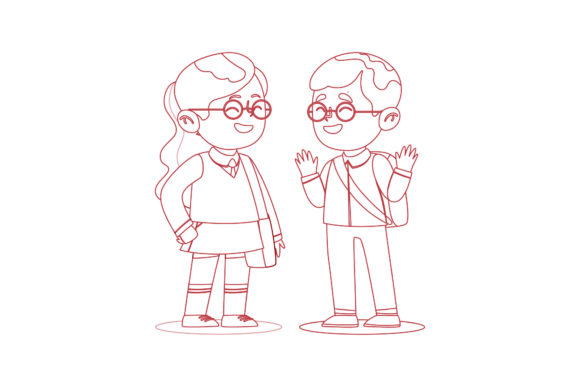
Kids Back to School Coloring Pages: A Practical Guide for Creators and Entrepreneurs
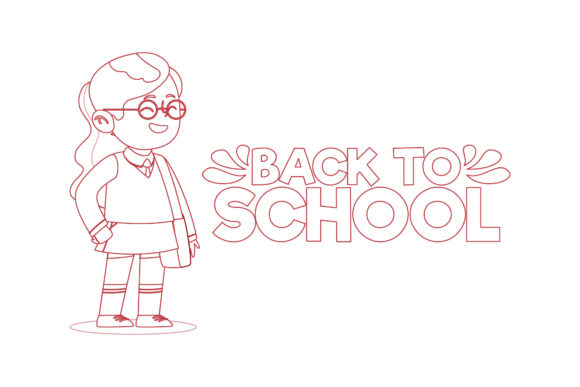
Back-to-school season is a prime opportunity for content creators, small business owners, educators, and freelancers to engage audiences with fresh visuals. Kids back to school coloring pages—especially those offered as vector design graphics—have become a versatile resource for everything from classroom activities to merchandise. But choosing the right set and using it effectively requires more than just clicking download. Many people overlook critical details that affect quality, usability, and long-term value. This guide walks through common mistakes and shows you how to get the most out of these files.
Why Vector-Based Coloring Pages Stand Out
A typical kids back to school coloring page might come as a simple JPEG or PNG. Those have their place—quick previews, social media posts, or one-time prints. But vector formats—AI, EPS, SVG—offer something fundamentally different. They are built from mathematical paths rather than pixels. This means you can scale them to a billboard or shrink them to a sticker without any loss of sharpness. For anyone creating logos, t-shirt designs, animations, or illustrations, vector files are the foundation of professional work.
The download package described here includes five formats: AI 10, EPS 10, PNG, JPG, and SVG. That range covers nearly every common use case. But having the files is only half the battle. Knowing when and how to use each format makes the real difference.
Mistake #1: Treating PNG and JPG as Primary Working Files
Many beginners gravitate toward PNG or JPG because those open instantly on any device. They’re familiar. But relying on raster formats for scalable design work is a trap. Suppose you are a small business owner designing a tote bag with a crayon-and-apple coloring page. The PNG looks fine on screen at 100%. When you enlarge it for print, the edges become jagged and the lines lose crispness. The result looks unprofessional and wastes material.
Better approach: Always start with the vector file—AI, EPS, or SVG. Use these for any resizing, editing, or layering. Export to PNG or JPG only when you need a final, uneditable version for web or quick sharing. For instance, if you are a teacher downloading the set for a classroom handout, the JPG may suffice because it will print at the same size. But if you plan to enlarge the page to a poster, open the SVG in your browser or the AI file in Adobe Illustrator to maintain clarity.
Mistake #2: Not Checking Software Compatibility
One of the most common frustrations is opening a file and seeing error messages, missing fonts, or broken layers. This often happens because the user’s software is outdated or does not support certain features. An EPS 10 file is widely compatible, but older versions of some programs may not handle it correctly. Similarly, AI files saved in a newer version of Illustrator might not open fully in an older release.
What to check before you commit: Look at the file versions listed. The package specifies AI 10 and EPS 10, which are broadly compatible. But if you are using free software like Inkscape or a limited online editor, test the SVG file first—SVG is an open standard and works reliably across platforms. Also note that the coloring pages likely use simple lines and fills, so font dependencies are minimal. Still, it’s wise to verify that your design tool can handle the vector files before you purchase or download.
Mistake #3: Overlooking Commercial Use Rights and Licensing
Many designers and entrepreneurs assume that any downloaded file can be used for anything. That is a quick way to legal trouble. When you buy a vector pack of kids back to school coloring pages, the license often dictates how you can use the artwork. Some restrict commercial use, limit the number of copies, or prohibit incorporating the content into merchandise for resale. If you are a freelancer creating t-shirt designs for clients, an unrestricted commercial license is essential.
Practical advice: Before you purchase, read the product description or contact the seller. Confirm that the license allows the specific applications you have in mind—whether that’s printed materials for your school, website graphics for your blog, or products sold on Etsy. Keep a copy of the license terms for your records. If the listing is unclear, choose a creator who explicitly grants broad usage rights.
Mistake #4: Ignoring Format Utility for Specific Workflows
Each file format serves a distinct purpose, and using the wrong one can waste time or degrade quality. Here is a quick breakdown of when each format in the download shines:
- AI (Adobe Illustrator): Best for deep editing—changing individual elements, recolorizing, or combining with other vector assets. Use this if you work in Illustrator professionally.
- EPS: A universal vector exchange format. It opens in many programs and is ideal for sending to a print shop or for use in older software.
- SVG: Web-friendly and editable in code or text editors. Great for animations, responsive websites, and app interfaces. Also works with free tools like Inkscape.
- PNG: Use for digital previews, social media posts, or backgrounds where transparency is needed but editing is done.
- JPG: Best for large color images without transparency—like a printed classroom handout where file size matters more than alpha channels.
A frequent mistake is using a JPG as an illustration source in a layout program. The compression artifacts become visible, especially around thin lines. Instead, place the EPS or SVG into your layout and export to JPG only at the final step. For example, a blogger creating a printable activity sheet should work from the SVG in Canva or the AI in Illustrator, then export a clean PDF or high-res PNG for readers.
Mistake #5: Neglecting the Design Potential Beyond Coloring
Many people view these pages as one-time printables only. In reality, the vector graphics are a goldmine for other projects. The same outline that works for a crayon-wielding child can become a decal on a laptop case, a logo for a tutoring brand, or an animated character in a back-to-school video. Entrepreneurs often miss opportunities because they don’t separate the outlines, recolor elements, or combine multiple pages into a composed scene.
A better use case: Suppose you sell custom planners. You can extract the school bus vector from the coloring page, change its color to match your brand, and place it on a weekly spread. Or take the backpack icon and use it as a subject in a sticker pack. Because the files are vectors, this kind of extraction and repurposing is effortless. Always keep the original unmodified AI file as a master and create variations from copies.
What to Verify Before You Download
To avoid headaches, run through this checklist:
- Format availability: Confirm the pack includes at least one vector format (AI, EPS, or SVG) that matches your software.
- Editing capability: Test that the layers are unlocked and elements are grouped logically. Some sellers flatten images, which defeats the purpose of vectors.
- Resolution for raster files: Check that the PNG and JPG are at least 300 DPI for print-ready output.
- Theme accuracy: Look at the preview images—are the designs truly back-to-school? Watch for generic clip art that may not fit your niche.
- Customer support: Reputable sellers offer help if files don’t open. Look for listings with responsive customer service reviews.
By being thorough upfront, you save hours of reformatting and avoid costly printing errors.
Practical Tips for Getting Started
Once you have the kids back to school coloring pages vector set, try this workflow:
- Open the AI file in Illustrator (or Inkscape for SVG).
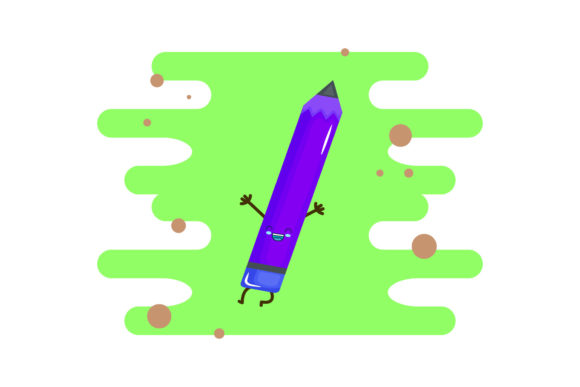
- Select the elements you want—an apple, a pencil, a chalkboard—and copy them into a new document.
- Experiment with color variations for different uses. For a t-shirt, use bold, solid colors. For a coloring page, keep the outlines black and remove fill.
- Scale your artwork to the exact dimensions needed. Vector handles this without breaking.
- Save your final design in the appropriate format for output—PDF for print, PNG for web, SVG for interactive.
If you are a beginner, start with the SVG. It is the most forgiving and works on virtually any platform. Open it in a browser, a vector app, or even a text editor for basic adjustments. As you grow more comfortable, move to AI or EPS for professional editing.
Final Thoughts on Choosing Quality Vector Coloring Pages
Kids back to school coloring pages are more than a seasonal activity. When delivered as vector design graphics, they become a scalable, editable resource for countless projects. The five-file package (AI, EPS, PNG, JPG, SVG) gives you flexibility, but your success depends on how you use them. Avoid the common pitfalls of sticking to low-resolution rasters, ignoring licensing, and overlooking software compatibility. Instead, treat the vector files as your foundation. They open, edit, and resize without quality loss, making them suitable for logos, illustrations, animations, t-shirt designs, and more.
Whether you are an educator preparing materials, a freelancer building a portfolio, or a small business launching a product line, these pages can save you time and elevate your output. Take the time to understand your tools, and you will turn simple outlines into professional results. Choose a set that matches your needs, verify the details, and start creating with confidence.